
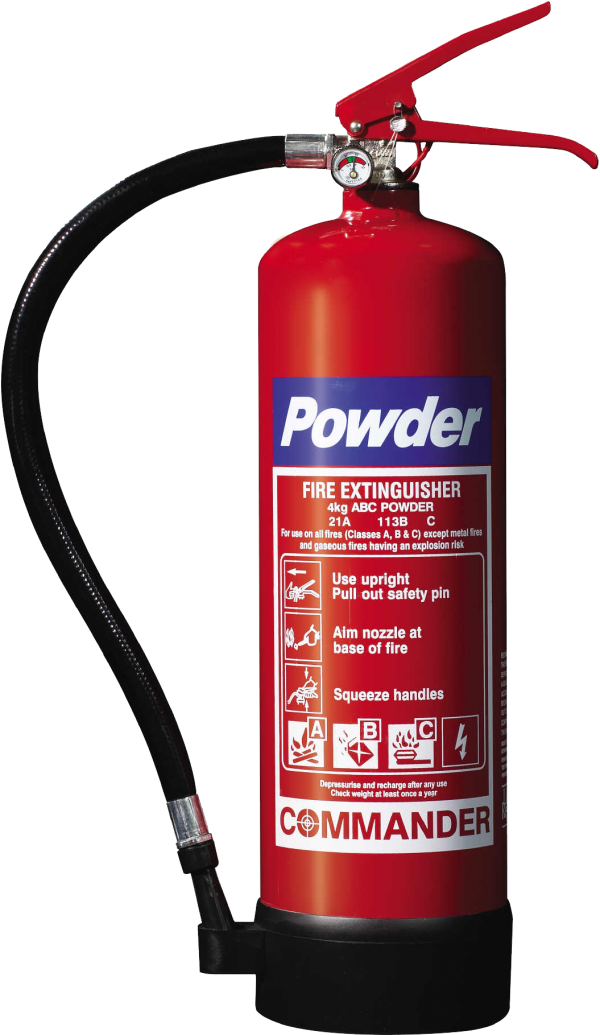
Dry Powder Fire Extinguisher
- Description
- Specification
Description
Micro Automation provides dry powder fire extinguishers, also known as dry chemical extinguishers, are highly versatile, general-purpose devices used to combat most types of fires by forming a barrier to separate the fuel from the oxygen source.
Key Points:
- Mechanism: The finely ground powder (typically monoammonium phosphate for ABC types) is expelled by compressed gas (nitrogen). It works through physical smothering, which creates an oxygen-blocking barrier over the fuel, and chemical inhibition, which disrupts the fire’s chain reaction. For Class A fires, the powder melts at low temperatures to effectively blanket the burning embers and prevent re-ignition.
- Fire Suitability: Multi-purpose (ABC) dry powder extinguishers are effective on Class A (solid combustibles), Class B (flammable liquids), and Class C (flammable gases) fires, and are safe for use on live electrical equipment up to 1000V.
- Limitations: The powder creates a significant cloud that can obscure visibility and cause respiratory distress, making it unsuitable for use in small, enclosed indoor spaces like offices or hotel rooms. The residue is also corrosive and difficult to clean, potentially damaging sensitive electronic equipment.
Specifications vary by capacity and manufacturer (e.g., meeting EN3 or BIS standards), but general ranges are provided below.
| Feature | Specification Range |
| Agent Type | Monoammonium phosphate (ABC) or sodium/potassium bicarbonate (BC/Monnex) |
| Capacities | 1 kg to 12 kg (portable); 25 kg to 100 kg (mobile wheeled units) |
| Working Pressure | Approx. 14 to 15 bar |
| Temperature Range | -20°C to +60°C |
| Discharge Time | 8 to 20 seconds (depending on size) |
| Discharge Range | 3 to 8 meters |
Related Products
-
 Quick View
CO2 Fire Extinguisher
-
 Quick View
Foam Fire Extinguisher
-
 Quick View
Water Type Fire Extinguisher
-
 Quick View
Fire Extinguisher Cabinet