

Fire Alarm Bell System
- Description
- Specification
Description
A fire alarm system is an integrated network of devices designed to detect fire, smoke, or carbon monoxide and alert occupants to evacuate. These systems are classified as either Conventional (zone-based) or Addressable (point-specific).
System Description
The system functions through a four-stage process: detection, processing, notification, and control.
- Initiating Devices: The “inputs” that trigger the system.
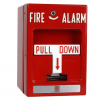
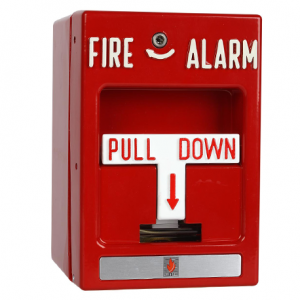
- Manual: Pull Stations or call points activated by occupants.
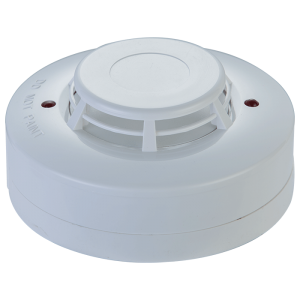
- Automatic: Detectors sensing smoke (photoelectric/ionization), heat (fixed/rate-of-rise), or gas.
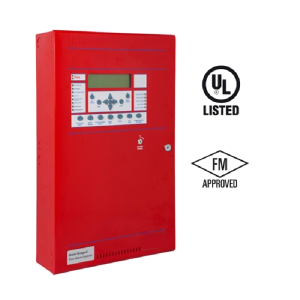
- Fire Alarm Control Panel (FACP): The “brain” that monitors the circuits, displays the status, and sends signals to the alarms.
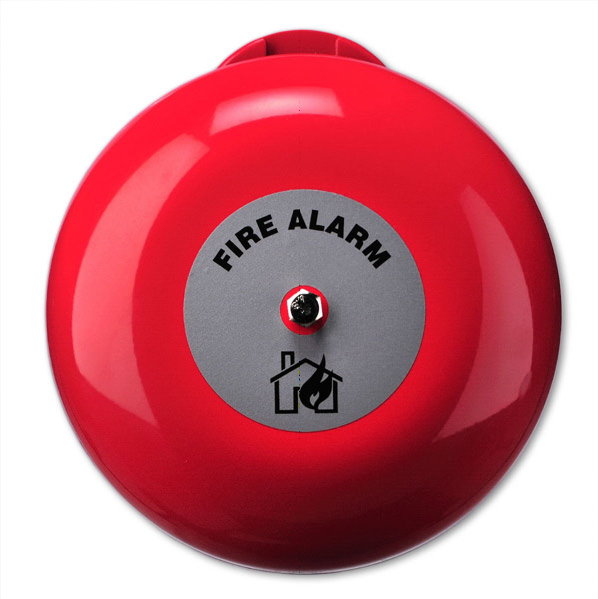
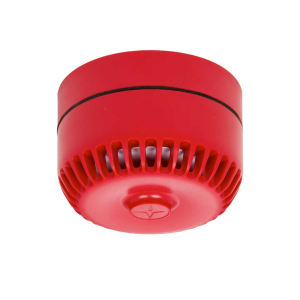
- Notification Appliances: The “outputs” that warn people via horns, strobes, and voice evacuation system.
Auxiliary Functions: Integration with fire suppression systems (sprinklers), elevator recall, and HVAC shutdown to prevent smoke spread
Standardized by NFPA 72 (USA) or BS 5839 (UK) to ensure life safety reliability.
| Feature | Requirement / Specification |
| Power Supply | Primary AC power with a 24-hour backup battery (secondary source). |
| Operating Voltage | Typically 24V DC for commercial systems. |
| Audibility | Must be 15dB above ambient noise or at least 75dB at the pillow in sleeping areas. |
| Visual Alert | Strobes must flash at a rate of 1–2 Hz and meet candela requirements (e.g., 15cd to 110cd). |
| Manual Placement | Within 5 feet (1.5m) of every exit and no more than 200 feet (61m) travel distance. |
| Wiring Integrity | Fire-rated cabling (e.g., FPLR/FPLP) required to maintain communication during heat exposure. |
Related Products
-
 Quick View
Photo-Electric Smoke Detector
-
 Quick View
NEO SERIES Control Unit
-
 Quick View
Ceiling Mounted Sounder and Flasher
-
 Quick View
AURA Series Control Unit
-
 Quick View
OMEGA Series Control Unit
-
 Quick View
Air Circuit Breaker (ACB)
-
 Quick View
Manual Fire Alarm Activation System
-
 Quick View
Heat Detector
-
 Quick View
Fire Sounder
-
 Quick View
Detection Systems Diagram